Tree Guides
Water Oak Tree Guide: Lifecycle, Risks, and Replacement Timing
2026-06-29 · 6 min read
Water oaks are everywhere in Jacksonville subdivisions—and they age out faster than live oaks. Know the lifecycle before failure chooses for you.
Water oak (*Quercus nigra*) was a builder favorite across Jacksonville from the 1970s through the 1990s: fast growth, cheap, easy to establish. Decades later, those same trees are **maturing on small lots** with sidewalks, driveways, and roofs in the fall zone.
Lifecycle overview:
**Years 0–10:** Fast height growth; relatively upright form.
**Years 10–25:** Canopy widens; limbs extend over roofs and streets; root flares and surface roots appear in sandy soil.
**Years 25–50:** Mature size often 50–70 feet; decay and weak attachments become common; heavy acorn crops.
**Decline (often 40–70 years on urban lots):** crown dieback, fungal decay, sudden limb failure, uprooting in storms.
Water oaks rarely match live oak longevity. On tight urban lots, planning **replacement or major reduction before failure** is smart—not reactive.
Common Jacksonville problems:
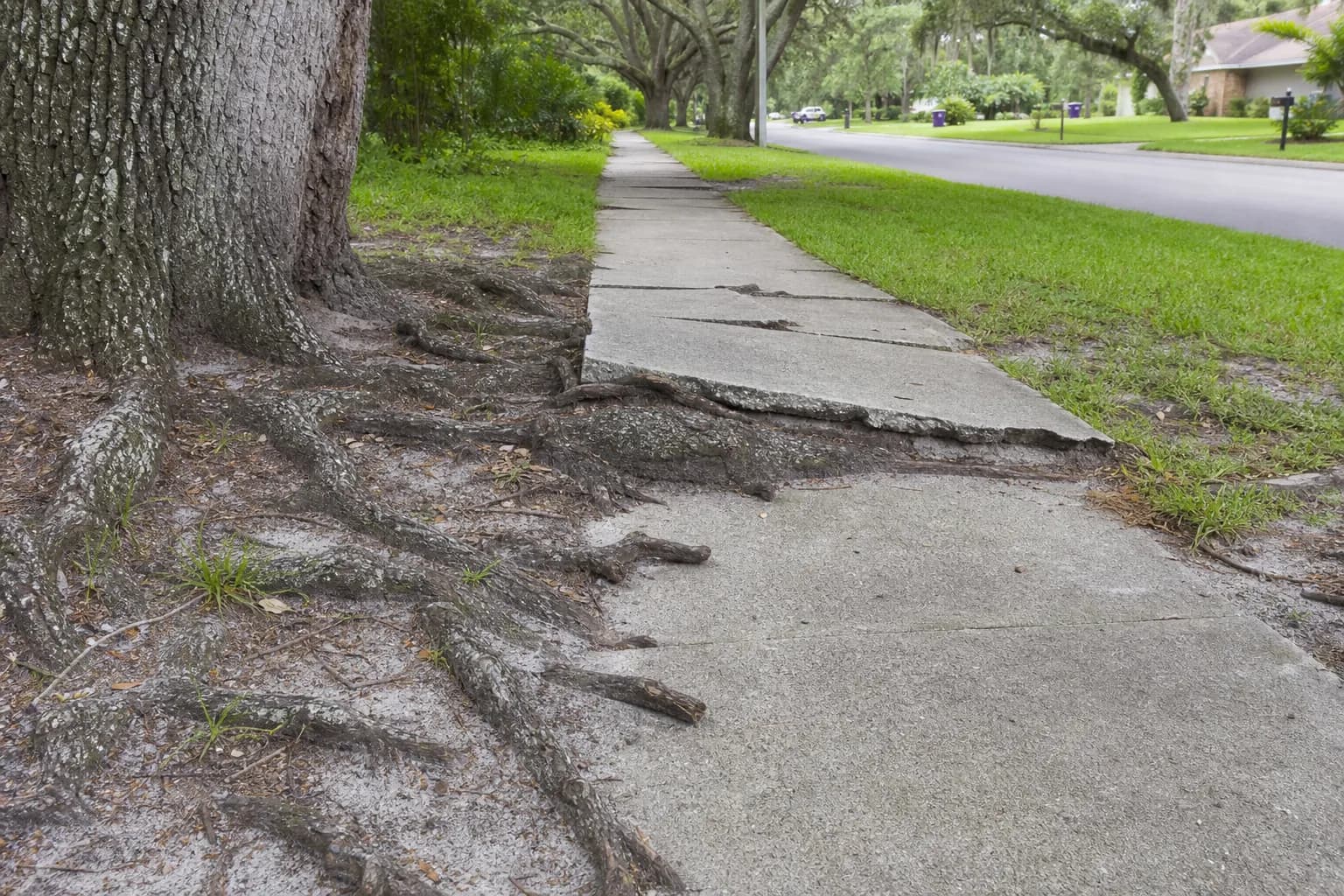
Surface roots buckling sidewalks and driveways. Included bark unions splitting in storms. Trees planted under power lines that are now grossly oversized. Multiple water oaks competing in a front yard originally meant for one tree.
**Care best practices:** structural pruning when young; later maintenance = deadwood removal and clearance pruning. Avoid topping—it weakens water oaks and triggers weak regrowth.
**When to remove:** significant trunk decay, hollow base, lean toward occupied areas, or crown loss exceeding healthy thresholds—especially before hurricane season.
We help homeowners plan removals with stump grinding and discuss replanting options suited to the space.
Need help with a tree job or claim documentation?
Arbros Tree Service serves Jacksonville homeowners with professional tree work and insurance-ready records.
Request a quote